
A Short History on Bad Beauty Standards for Black People
Social media made the promise of creating a more global space that expands definitions of beauty.
Black most beautiful woman; Global beauty standards were so heavily viewed through a Eurocentric lens for decades, limiting rather narrow representations until quite recently. Yet, today the world is changing a great deal such that there are not just rare exceptions to black most beautiful woman but rather praised norms. That evolution has not taken place over the span of a single night, but rather it is a byproduct of decades spent working patiently to create spaces for underrepresented voices, celebrate their culture, and make its presence known. From the catwalks of Paris to the big screens of Hollywood, aesthetics has been part of a burgeoning conversation about beauty across skin tones, hair textures and traits that define Black women around the world.
To fully understand this modern twist you have to realize that beauty has always been a social and political concept. Colonial and systemic structures have governed who has a right to beauty and systematically worked omitting women of color from being considered beautiful. Going by the history of media over time, spotting a black most beautiful woman covering prestigious fashion magazines used to be a big deal that would even make headlines on its own. And now, more than anything else it represents a shattering of barriers and a rewriting of a markedly narrow and exclusionary narrative.
Changing the Framework of International representation
Beauty is being democratized heavily, globally. Gone are the days of elite fashion editors or Hollywood executives exclusively controlling taste—now there exists a public opinion amy that elevates authenticity and cultural heritage. The internet, especially the social media platforms that exist in today climate, have given women across cultures the ability to create their own aesthetics as opposed to waiting for validation from outside sources. This shift in culture has made industry around the world realize that a black most beautiful woman cannot just be given to one, tokenized individual but rather Black beauty is multidimensional as it touches on shades of colors, hair types and cultural backgrounds.
Historically, representation was heavily conditional. Even if a Black woman appeared in mainstream media, she was always Eurocentrized—her hair straightened whilst filming, her skin chemically lightened during post-production and her features softened for the paler demographic. One aspect of the modern empowerment movement was taking back these features — like embracing afro-textured hair, locs, melanin-rich skin and full lips. The reclaiming of identity has redefined who a global symbol of style and sophistication really is.
Reclaiming Identity: Historical Barriers
The Legacy of Eurocentric Standards
The international beauty scene had long relied on a hierarchy that held fair skin and straight hair at its highest point of desirability. This history of colourism and feature-based discrimination very much imparted upon how Black women saw themselves and were treated thereafter by the world. Dark skin had long been relegated to hard work rather than leisure, and natural hair was considered unprofessional or (even worse) uncouth — systematically denying Black femininity. To comprehend the essence of this movement, we must reflect on the past struggles and victories that cleared a path for every black most gorgeous woman who commands stage today.
The Naarhu Movement (the “Black is Beautiful” movement) as a Trigger
This first big change in the history of modernity, took place in the 1960s, with “Black is Beautiful” movement developed in the United States and different points of diaspora. It was not simply a fashion statement but rather an act of psychological and political defiance. It went against the grain of our long-held belief that Black people needed to fit white standards of affiliate in order to feel welcome. Home → beauty Activists and artists, regular people too, started to wear their natural hair, traditional African prints and embrace the natural colours of their skin. In setting the stage and standard for global beauty ideals, this period set the monumental groundwork for todays appreciation of diversity.
Beyond the looks: Beauty meets brains
Today when we talk about global icons, beauty is no longer restricted only to the physical attributes of a person. Modern-day beauty is an intersection of aesthetics, intelligence and social good — they recognize that. Women who dominate the beauty conversation today have long crossed over in to philanthropy, activism, entrepreneurship, and intellectual heavyweight status. On their platforms, they advocate for civil rights, access to education and mental health.
A more inclusive perspective of beauty that has changed the self-images of young girls of color. They no longer see icons as mere faces in a screen, but mentors that show it is possible for smarts to co-exist with elegance. A narrative modern on the lines of one that honors outer strength along with inner elegance will cement being a celebrated icon of beauty to an icon of change.
From the Age of Icons to the Era of Global Platforms
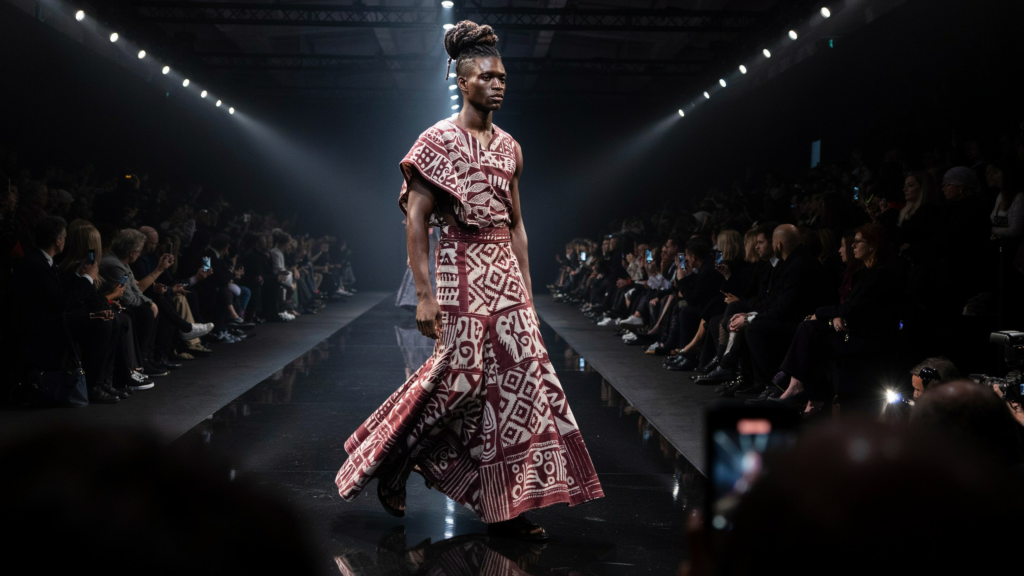
Runway Rebels and Silver-Screen Supporters
In this modern era, the media space has been largely shaped by visionary trail blazers who not only redefined what a black most beautiful woman looks like to the world, For decades high-fashion was somewhat exclusive with just one token space for a woman of color in large runway shows. But trailblazers would not settle for less, insisting on respect, equal pay and representation. In this way, they paved the path for the surrounding generations to stride.
Because when Naomi Campbell and Iman walked the international runways they weren’t just adorned in the fashion of the time, they were delivering an unyielding message that a black most beautiful woman could also command attention as high-fashion luxe. By all means, Iman with her regal poise and Naomi with her iconic strut tore up the industry’s unwritten rules. They showed that melanin rich skin is not some flavour-of-the-month niche interest, but rather the quintessential essence of high fashion. They were a wake up call for legacy brands to review their marketing approach and acknowledge the economic purchasing prowess and cultural influence of Black consumers around the globe.
Hollywood: The Power of Visual Representation
Actresses made a similarly healthy contribution on the screen, challenging deeply held stereotypes everywhere. In the past, film and roles for Black women have often been limited to menial or super-exaggerated characters. It has been an incredible win for representation [3] in characterisation—the shift towards complex, leading-characters. Lupita Nyong’o, Viola Davis and Halle Berry are just some of the actresses who have used their global fame as a platform to discuss self-love, colorism and contend with an industry that has been systematically deprived them of beauty.
Especially Lupita Nyong’o really has addressed dark skin, natural hair as political because with that accolade of the ‘most beautiful woman black’ carries both power and weight. Nyong’o has addressed the pain of colorism and her journey to self-acceptance in speeches, including at the 2018 Essence Black Women in Hollywood Awards and through Sulwe, a book for children. She has inspired young girls around the world to embrace your skin tones and textures, going so far as to wear her deep complexion high with traditional African styles adorning in elaborate natural haired braid A-tionsto—the red carpet.
In November 9 to 16, the Miss World will held in India which is one of the four international beauty pageants A New Perspective On Pageantry Around The Globe
For a number of decades, international beauty contests were increasingly condemned for insisting on an overly homogenous and Euro-centric construct of femininity. Simply winning meant being presumed out of all blacks as having fair skin, delicate features, and long straight hair. But the world of pageantry has drastically changed in recent years, and has recently worked to reflect more realistic diversity on a global scale.
Just how well pageants can break from the old, heading-pretty mould have winners of long hair but a black most beautiful woman is easier come by than ever: Zozibini Tunzi thrilled her fans with natural short-cropped hair when she was crowned Miss Universe this year. As Tunzi claimed her crown, she shared a message about leadership and self-worth: “I grew up in a world where a woman who looks like me – with my kind of skin and my kind of hair – was never considered beautiful.” This achievement also represented a breakthrough in the fashion world, they sent out the global message that true beauty lies within and that natural heritage is the highest expression of elegance.
Influence of Modern Music and Pop Culture
The global music industry went on to be a huge vessel of redefining aesthetics outside of just film and fashion. The performers’ music videos, concert visuals and red-carpet appearances affirm Black history, spirituality and beauty. These artists have sculpted a visual language that marries traditional African aesthetics with contemporary high fashion, resulting in work that is both empowering and global.
The icons, such as Beyoncé and Rihanna, who have not only become music hit makers but innovators in beauty and fashion markets across the globe. Fenty Beauty; when she launched with 40 shades of foundations, the whole beauty industry had to adjust accordingly. It went on to show the world that honouring multi-toned skin is not only a good thing for society, but a massive hit business wise. They have suggested that beauty is about being in control, free to express oneself, able to determine one’s own definition.
Consumer Power and the Business of Beauty
The cyclone of cosmetics and skincare industry
The global cosmetics industry been notoriously non-inclusive for decades. Since most makeup brands from the mainstream were making products that catered for lighter skin, women of colour had to make do with whatever they could find, which was usually a dust or ash coloured version on the shelves. An industrial oversight became psychological abandonment, telegraphing to countless women that the hue of their skin was worthless and unwanted. Yet the market has shifted dramatically because of consumer advocacy and entrepreneurial leadership. The revolution of cosmetics have been stand up for, which has paved a massive course to perfect that any black most beautiful woman can get toners or cosmetic items targeted only on her single skin colour compositions.
Decades prior, mainstream cosmetics brands flat out dismissed deeper skin tones leaving a black most beautiful woman to mix multiple shades of foundation to find her baseline. This battle created a land for black owned sustainable makeup brands that could not wait on legacy corporations to evolve. Visionaries followed suit, with game-speakers creating product lines around hyper-pigmented hues, deep undertones and skin-matching colors—that’s where Powerhouses like Pat McGrath {aka THE MOST INFLUENTIAL MAKEUP ARTIST IN THE WORLD}, came about. These brands demonstrated that darker skin tones demand something stronger than the same formulation and shade, simply made with dark pigmentation for fair skin girls.
Dismantling Colorism in Skincare Science
For decades, skincare research has also been severely exclusionary; clinical trials and product development have favored the skin of Caucasians. This created a huge void when it came to skin issues associated with higher concentrations of melanin including hyperpigmentation, melasma, and atypical wound healing patterns. By delving into the skin concerns associated with melanin-rich skin such as hyperpigmentation and hydration, contemporary brands shine a light on the authentic physicality of the black most beautiful woman.
Inclusive skincare science has been driven by dermatologists of color who push for more diverse education and testing of products on all skin phototypes. Rather trying to alter or bleach your skin, nowadays skincare routines are made to focus on highlighting the natural glow. This change has recently caused the popularity of skin-lightening creams with toxic ingredients to drop massively, Kingdom-wide and internationally. Women have come full circle, owning their original tone—realizing that well-moisturized and protected skin is the true wellness benchmark.
Natural Hair Psychology and Social Emancipation
Legislative Protections Under the CROWN Act
Natural hair is essential to any consideration of the journey of Black beauty. Natural afro-textured hair was considered “unprofessional” or “untidy” in corporate offices, schools and public spaces for generations. Women seemed to be practically coerced into using chemical relaxers, hot combs or costly weaves, not a choice but rather an obligation to conform. However, the modern natural hair movement has(re)defined how we care for our hair as an act of self-love and political resistance. This fight ultimately resulted in the adoption of the CROWN Act (Creating a Respectful and Open World for Natural Hair) across numerous jurisdictions, which prohibits discrimination on the basis of hair texture and protective hairstyles such as braids, locs, and twists.
Claiming the Crown: The Art and Identity of Hair
Hair care became a ritual of self- appreciation and love rather than a chore; with the natural hair movement. Every social media platform ever has instructional how-tos on caring for curls, coils and kinks. Black women are showing that their hair is naturally professional, beautiful and regal simply by wearing it on those platforms like corporate boardroom meetings, high-profile interviews and red-carpet galas. Such a cultural reclamation made hair-care industries spend millions on sulfate and paraben free, chemically-free products specifically for textured hair.
Digital Media and the Beauty Devolution
Digital media, after all, has almost completely decentralized beauty gatekeeping. Previously, editors at major fashion magazines made the determination over who deserved to be seen. Nowadays, it is social media that fills the roles of a more democratic venue where creators show people that a black most beautiful woman does not solely represent society rules but rather her choice to express herself.
Dark skinned beauty influencers, lifestyle vloggers and activists create global communities through digital platforms. They review the products, talk about personal struggles and offer spacing tips. The direct-to-consumer (DTC) communication has created an economy wherein brands can no longer dismiss any demands that marginalised groups make. Digital fatigue is high and when a brand does not have inclusive shade ranges or respectful representation — brands are called out in increasingly larger forums almost immediately. This allows for active consumer participation to keep the future of beauty both diverse and representative of real people around the world.
Where the Future of Diversity and Global Advancement Lies
The Future of Global Representation and Intersectionality
In the future of the black most beautiful woman, we will have widened our categorising sexism to far and beyond binary expressions, cultural backgrounds that differ from patriarchy and regions on the planet. This meeting is the most recent conference in a long history of conversation regarding identity, and has proven that representation isn not an end game; rather it is a never ending journey. All questions of diversity become moot as future generations inherit a world in which diversity is natively enshrined as the norm of creative expression, not simply tolerated.
But, for this momentum to be sustained, systemic accountability is important. Modern media needs to accept the fact that claiming a black women as the most beautiful is not just an episode in time but rather a continuing strike for genuine equality. That means a commitment to diversity behind the scenes, too — makeup artists who know how to work with dark skin, hairstylists trained for textured hair, executives who greenlight stories that center on diverse characters. The only way we can progress is by getting inclusion not just in the headlines, but at the core of creative industries.
Conclusion : Optimisation towards Aesthetics is Unstoppable
Beauty is no longer boxed by geographic borders or narrow historical biases. At the end of the day, it is not how well you fit into someone else’s idea of beauty that makes a black most beautiful woman; for this global change demonstrates that instead, your black beauty lays in living out your truth unapologetically. A collective cultural awakening to appreciate different skin tones, textured hair, and rich cultural heritages around the world. A celebration of human beings in their most honest, diverse and beautiful facets.
In honoring these pioneering pioneers of the past, we make certain that young girls coming up today cannot help but see a black most beautiful woman in every walk and pursuit of human endeavor. The limits of potential have been pushed further than ever, whether that be to catwalks, research roles or heads of state. No longer is beauty only used as a weapon of exclusion; it has transformed into a fully inclusive acknowledgement of our identity, strength and grace.
Frequently Asked Questions (FAQ)
Q1: A lot of people ask who is the most beautiful black woman in history? — and why are we asking this question in the first place?
Putting one human being as the standard of beauty is problematic because beauty is personal and cultural, it is multidimensional Sure these women like Iman, Naomi Campbell and Lupita Nyong’o have been long adored outside the borders of the black experience but true beauty is embedded in the many hues of black woman that represents strength, intellect and authenticity year after generations.
Q2: What was this “Black is Beautiful” movement?
The “Black is Beautiful” was an aesthetic and political campaign that began in the 1960s. It aimed at breaking down the Eurocentric standards of beauty which rendered blackness subordinate to whiteness. The movement educated black people about self-acceptance challenging them to love the skin they are in, their hair texture, history and other unique characteristics of their culture all of which have become absolutely essential elements necessary for modern diverse representation.
Question 3: The Fenty Effect — what is that?
The term, coined from Rihanna’s 2017 launch of Fenty Beauty with about forty different skin-tone foundations and catalyzed by industry-wide changes that followed the product suite into stores, celebrates ethnic diversity in all its shades. This basically shoved legacy cosmetics brands to widen their shade ranges, thereby demonstrating that diversity is not only possible or profitable, but also very necessary.
Q4: Why is CROWN Act important?
The CROWN act is a bill that prohibits employers and schools from discriminating against hairstyles. It safeguards the right of individuals to wear natural textures and protective styles (i.e., locs, braids, twists, and afro hairstyles) affirming that a natural texture is professional and classy.
Q5:So what is the essence of realizing a black most beautiful woman?
At the end of the day, being a black most beautiful woman is about joining your strengths to make it all work through tradition and genuineness. It is getting past the external and viewing what these humans are doing for ourselves on a more mental, creative and social level.