
Celebrating the Grace and Diversity of the Africa Beautiful Woman: A Cultural and Aesthetic Journey
Beauty goes beyond appearance, beauty is a subjective and ever-changing concept rooted in culture, history and self-expression. When one searches for an africa beautiful woman or thinks of her as a concept, they are often embarking on the journey that covers some of Earths most diverse, rich culturally, and vibrant aesthetics. No single definition of beauty could even begin to encompass the immense variety of human features, skin tones, hair textures and traditional forms of dress.
Before you can fully grasp what an africa beauty woman, it helps to be mindful that Africa is not one country, but rather a large continent consisting of 54 unique countries. And so, I believe that each nation—indeed even each tribe within those nations—has its own history of tradition and value system that result in their own form expressing elegance visually. From sun-soaked Sahara dunes to the verdant scenery of the southern cape, beauty is championed — not simply as an external quality but a performative act distilled in effortlessly extending communal pride; ancestry replete with endurance.
This journey of deep discovery will unveil the many dimensions of African beauty, freeing us from a superficial perusal to delve into evocative history, regional character and contemporary worldwide influence of women from this remarkable continent.
Directly U — Redefining Beauty Standards Around the World.
For long, both the global media and fashion landscape cast Eurocentric definitions of sophistication, often with minuscule representation. However, the increase in global appreciation for an africa beautiful woman has been integral in breaking down those antiquated norms. Currently, the world is waking up to what African communities have been in jubilation for thousands of years: that dark skin tones, natural coiled hair and strong and varied facial features are qualities that command an unparalleled grace.
This change goes beyond seeing ourselves represented in magazines and on runways; it is a reclamation of culture. Women around the globe of African descent are praising their natural characteristics. From the international natural hair movement to the embrace of deep melanin tones, even down to what parts of traditional African fashion dress have integrated into haute couture, Africa aesthetics remains an ever-present force.
When talking about the beauty of African women, one talks about resilience. It is a tribute to the resilience of traditional practices that have outlasted colonization, modernity, and globalization by healing and growing beyond the academic ghettoes they often found themselves in.
The Kerin UncurlYqewl (Curls) The Tapestry of Regional Beauty Traditions
In order to realize the vast spectrum of aesthetics dotting the continent, we need to take a closer look at how beauty is defined and cultivated differently across varying regions. A lady in East Africa would definitely wear and conduct herself differently from the woman in West Africa, each epitomising her own beautiful brand of attraction.
East Africa: The elegance of simple and traditional
This definition of beauty extended into parts of East Africa, including nations like Kenya, Ethiopia, Eritrea and Somalia where it was connected to a balance between whites or opposites such as European sophistication and tradition with melodramatic unadorned elegance alongside complexly dressing up with significant socially-held motifs.
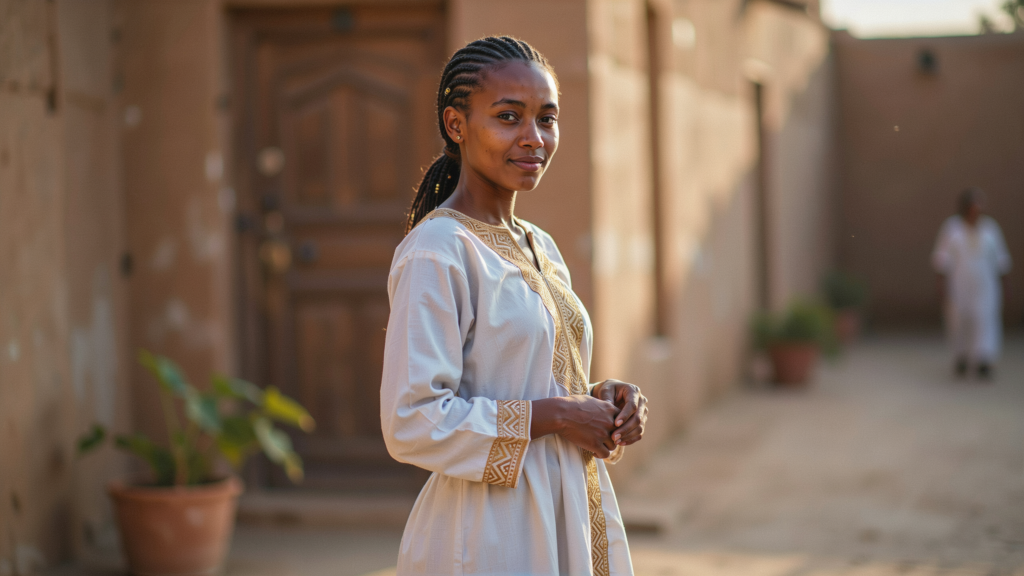
The stunning soft facial features, high cheekbones and lovely habesha kemis (traditional white cotton dress embroidery with colourful trim) make women in Ethiopia and Eritrea the most widely recognized demography around the globe. Hair is often strung into shuruba, an elegant braiding style that has carried forth through generations.
South of that, among the Maasai and Samburu communities of Kenya and Tanzania, an africa beautiful woman is painted as one bedecked in bright beads and adorned bodies. The Maasai women are famous for their elaborate flat, circular beaded collars, or esurtei The beads represent specific meanings; health, peace, energy – and connection to the land. In this context, beauty becomes a visual conversation with – rather than just an objectification of a community — it is an extension of the woman speaking her status, wisdom and connection to cultural history.
West Africa: Bright Colors in Big Patterns
When it she goes to West Africa — countries such Nigeria, Ghana, Senegal and Ivory Coast, the style manifests itself in more rich and glorious ways.
Beauty is a cause for loud, joyous celebration in West African cultures. That manifests itself in significant part through the use of traditional textiles — Ankara, Kente and Aso Oke. A West African Region beautiful Woman is always Praised For Her Elegance, The Way She Carries Complex Designs Well In Total Poise With/Furthermore Which Connects To Her Ancestry Through Clothes.
Another medium of artistic expression can be found in hair, which is especially important in West Africa. Be it elaborate, defined geometric corn rows to towering Gele (traditional Yoruba head wraps), head styling is a respected and sacred art form. From earlier times till now a woman’s hairdo could indicate her wealth, status and the fact if she is married or single. The meticulous grooming, skin moisturizing with raw shea butter sourced from local women and colorful outfits form an impressive fashionable look that many instantly recognize and admire.
North & Southern Africa: Flavour [ Bradt Guide to … ]
That is to say that the visual identity of an africa beautiful woman keeps a fascinating change when going from the north part of our continent to the south. The geographic extremes of the continent have developed a wide range of beauty practice expertise, based on distinctive climates, histories and resources.
North Africa is a world where the desert meets the Mediterranean.
North African nations – like Morocco, Algeria, Tunisia and Egypt — the style is a lovely meeting point for Amazigh (Berber), Arab and Mediterranean aesthetics.
Tatouage berbère (or siyala) is an ancient form of facial tattooing that was practiced for centuries by Amazigh women in the Atlas Mountains. In centuries past, those diamond-shaped markings on the chin, forehead or cheek were worn as amulets — signs of a tribe’s protection, fertility and identity. This practice is less common in younger generations today, it continues to be a deeply admired and meaningful part of North African culture.
In addition, since kohl is used to enhance the eyes and henna helps in coloring the body which leaves an illusionary beautiful design by using very complicated old methods that North African women enjoy sticking on their hands and feet every day. This is beauty that captivates softly and quietly, hidden beneath layers of timeless ancestral practices.
Southern Africa: earthy traditions and bold identity
Southern Africa On the twisted scrubby roads winding throughout countries of South Africa, Namibia and Botswana, beauty seems to be based more on earthy all-natural components as well as their pride in local native traditions.
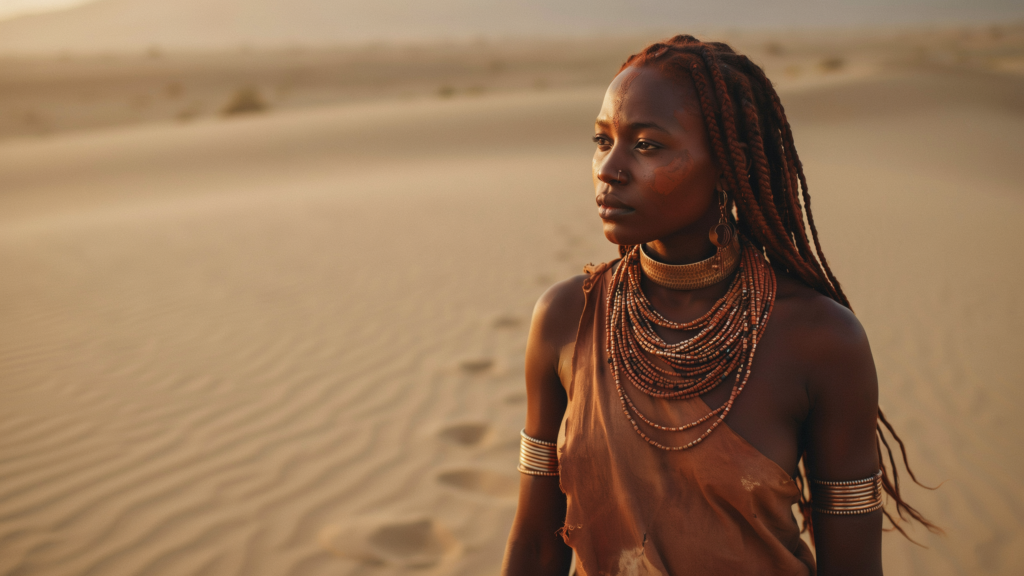
The HIMBA, NAMIBIA THE TRADITIONAL AFRICA BEAUTIFUL WOMAN AMONG the Himba people of Namibia, it is a stunning ACT & 4 RED OCHREthat were smeared from skin through HAIR with a mix between BUTTER FAT and AROMATIC resin; otjize. Not only does this paste help to protect their skin against the scorching desert sun and insect bites, it provides for a deep rich reddish color that symbolizes the life-giving soil of earth and blood.
Across the continent in South Africa, multiple cultures flourish, showcasing elegance through intricate beadwork and architectural garments from the Zulu, Xhosa, and Ndebele people. Married Ndebele women have a tradition of wearing heavy brass and copper rings around their necks and legs, known as idzilla, signifying the union between her husband and the community. Rooted and architectural, they showcase what beauty in this part of the world looks like – defined by strength, patience and lineage.
Natural Secrets of Skin Care For the African Continent
Way before beauty science lab firms began churning out laboratory-made cosmetics, there was the organic and healed power of nature on which African women drew 100% to keep their skin glowing, youthful and healthy. The need for synthetic chemicals to enhance their looks has never been of great importance and is the primary reason an africa beautiful woman natural glow has been valued even today, centuries later.
Shea butter — The golden elixir of West Africa
Shea butter (Vitellaria paradoxa) is probably the best-known skincare product coming out of Africa, and its popularity will no doubt brings to mind West African shea — known as “women’s gold.” This very rich emollient, extracted from the nuts of the shea tree, contains vitamins A, E and F.
Women have used raw, unrefined shea butter for generations as a skin moisturizer, to heal sunburns, and preventive treatment of stretch marks and keep skin elastic. From its production rooted in an important female-led industry, the income and independence to over 16 million rural women and their families reliant on shea butter, make it a beautiful signature of harmony with nature, livelihood improvement and community health – fundamentally a symbol of female empowerment.
Argan Oil: The liquid gold of morocco
Argan oil has been an integral part of the beauty routine for the Amazigh people in Morocco, particularly in the arid region. This oil is derived from the seeds of the argan tree, which only grows in Morocco and otherwise is known worldwide for its elusive properties with a light composition being rich in antioxidants and fatty acids. North African women cover their tresses with it for glossy locks and protect the skin from the hot dry desert winds.
Hair as an Art Form – Braids, Locks, and Crowns
You see, as an africa beautiful woman, her hair is not just a physical attribute; it is a divine crown that tells the story of who she is, her spirituality and her journey. Afrikan hair is arguably the most complex, artistic of all human hair design systems as African hair texture are wrought with varieties from soft curly to tightly coiled 4C.
Box Braids/ Cornrows: Not a trend but an actual ancient way of protective styling. The exact color and configuration of a woman’s braids had the potential to convey her tribe, age, marital status and even her religion in many societies throughout history.
16 Bantu Knots: Originated amongst the Zulu in Southern Africa, protective coiled buns are both a statement hairstyle and moment of pride that echoes modern Afrocentric ideals.
3) Locs (Dreadlocks) — Common among many African cultures, locs often ties to spiritual devotion; natural harmony; symbol of strength. This style of hair is a beautiful demonstration of the journey with patience and growth.
Today, the celebration of natural hair is both a political and social stand against oppression and colonialism while illustrating the limitless versatility of modern afro-textured. The beautiful woman in 2023 globe will be well displayed as she continues to present herself with pride at all levels.
Africa has one of the healthiest age distributions in the world and African women are taking advantage of it.
The story of the africa beautiful woman has changed between cultures, from local admiration to global respect in the egesity century. African women today are no longer passive subjects of ethnographic studies or obscure artistic musings; they have become loud, active, and powerful forces in the fashion, entertainment and entrepreneurship space and social justice.
This widespread enlightenment has shattered numerous ancient follies. For generations, Western media fell into the trap of painting Africa with a brush of poverty and adversity, absent were splashes of the vast sophistication, artistry and beauty that drips from its people. The emergence of African icons on the global stage has necessitated that this narrative be rewritten as a multifaceted image of beauty on the continent but one that is also uplifting.
Pioneering Change In Fashion and Modelling
The international modeling industry recently saw a major change toward representation, led by trailblazing African women who proved naysayers wrong along their journeys to success in the traditionally Eurocentric world of beauty.
Earlier decades saw pioneers such as South Sudanese-born Alek Wek and Ethiopian model Liya Kebede breaking through on high-fashion runways. Relatively nothing the dark skin and very short, natural hair of Alek Wek was still in line with Eurocentric beauty ideals of the 1990s but also offered an avenue for blackness through time.
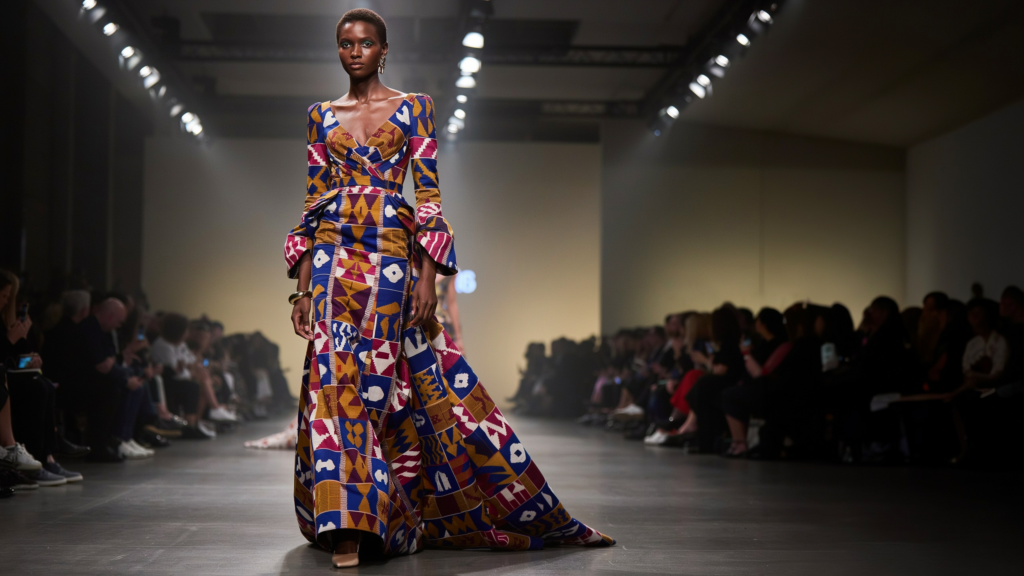
Now modern supermodels like Adut Akech and Anok Yai have made waves in the international catwalk sphere. Known for being the second black girl to ever walk a Prada show after Naomi Campbell, Anok Yai is now a world renowned high fashion babe. This visual revolution clearly showed that an africa beautiful woman is more than a temporary textile for global runways, and instead, she remains one of the strongest points/references in the history of modern fashion — Deep Dark Skin tones and Natural features are a pure high class elegance.
New Narratives in Global Cinema and Media
African women had also transcended the runways and reached major motion pictures around the world. “What’s Nollywood?” — Nigeria’s booming film industry and the growing number of African actresses in Hollywood have reshaped African storytelling.
Those were the sentiments expressed by famous actresses like Lupita Nyong’o (Kenya), Danai Gurira (Zimbabwe) and Thuso Mbedu (South Africa), who have all used their international platforms to shine a light on their heritage. Academy Award-winning actress Lupita Nyong’o has previously spoken out against the harsh realities faced by dark-skinned girls children suffering from colorism through children’s books like Sulwe teaching self-love to little girls.
Not to mention historical epic films such as The Woman King, with its story of the Agojie, the real-life military corps of the Kingdom of Dahomey in West Africa’s beloved all-female warriors and another representation of beauty. These creators demonstrate that an authentic African woman is defined through the stories that encapsulate intellectuality, physicality, creativity and a whole body of prestige.
Business and Empowerment: The Fabulousness of Beauty
Beauty in African culture Uganda sublime beautiful aspect–beauty has never been purely physical. Reality beauty is tightly linked to a woman’s character attribute, her strength of spirit, her service to the family, and her lead in the community. In contemporary times, this classic definition of beauty came forth in the form of an uprise among females in biz and independent #girlpower.
Green Beauty Revolution: The Pioneers
With African women topping the gender-parity list in terms of entrepreneurship, and global consumers demanding clean, natural and ethically sourced cosmetics – enter the new trailblazers heading this trend. Women’s entrepreneurship is exploding as they create high-end skincare and hair care brands around the continent using local ingredients such as shea butter, argan oil, marula oil and karkadeh (hibiscus).
Through the sustainable sourcing of these raw products, which are procured from women’s cooperatives in rural communities, these women-led brands are creating livelihoods for thousands of women. This is a refreshing approach to empowerment as the contemporary definition of an africa beautiful woman is present without her intellect, resilience and business acumen.
Political and Social Leadership
From Nobel Peace Prize winners like Wangari Maathai (Kenya) and Ellen Johnson Sirleaf (Liberia), to today’s grassroots activists championing climate justice and girls’ education, African women have fought for social change every step of the way.
Many of their leadership styles are based on empathy, resilience and pride in the community, and they provide a new flavour to what it means to be powerful. Worldwide perception on an africa beautiful woman is no more passive muse however vibrant leader hacking the future of international industries acknowledging her final superpower is definitely her voice, her mind and heart.
The Digital Revolution: Social Media and the New Wave Of Representation
Now that we have more connectivity than ever before, the visual story of an africa beautiful woman has been completely democratized. In the pre-digital age, a few editors, casting directors and media moguls in Western fashion capitals determined what — and who — was “beautiful.” As of today, platforms like Instagram, TikTok and Pinterest have provided African women the means to bypass such conventional gatekeepers by curating their own narrative.
From trending topics such as #MelaninPoppin to groups like the Natural Hair Movement and the Black Girl Magic movements, each has become an international phenomenon of spaces on the web for women with natural skin tones, protective hairstyles and fashion choices. This new type of representation allows for a worldwide sisterhood to grow, and enables young girls around the globe to see themselves positively reflected in mainstream media but also authentically online.
Contemporary artists are demonstrating through their self-portraits, lifestyle blogging and digital art that African beauty cannot be boxed into one definition. Is complex, in continuous evolution and quite personal.
The Battle to Overcome Colorism and Texturism Continues
While it is certainly a moment to celebrate the world embracing African beauty, it is also necessary to recognize that these struggles are ongoing. Colorism and texturism are two of the most important fights that African women continue to face.
Colorism: This refers to prejudicial discriminatory bias against individuals with a dark skin shade, usually among people of the same ethnic or racial group. Due to colonial systems favouring lighter skins for centuries, there is a booming market in many parts of the world including Africa for toxic chemical skin-bleaching creams. But with modern activists, filmmakers and influencers tirelessly at work to ban these caustic items — all while advocating that no shade of melanin is ugly.
Texturism — This is the institutionalized favoritism of looser curl patterns over very tightly coiled, coarse 4C hair Countless women are still discriminated against at work, or in society for wearing their hair naturally.
To truly celebrate the essence of an africa beautiful woman and to honour her beauty there is still a huge issue standing inbetween, these systemic biases that prevents all shades or kinks of hair from being equally valued treasured and revered.
Conclusion: A Celebration for All

The phrase an africa beauty of a woman ultimately describes a legacy that is both ancient and modern, rooted in the heritage but also fluidly moving into the future. The colorful beadwork of plains East Africa, the full oils and polychromes of North Africa to bold patterns of West Africa or saturated colours to earthy tones in South Africa — its a living history book of our human diversity and resilience since time immemorial keeping each other warm.
Perhaps style is not based on symmetry but soul and pride and roots. With the continued expansion and redefinition of global standards of beauty, it is not surprising that the world will remain awed by the elegance, poise and unrivalled magnificence of African women.
Frequently Asked Questions (FAQ)
1. What makes an africa beauty woman one of a kind?
An africa beautiful woman is made up of a constant balance of the colors of our skin (varied shades), texture (long, short, curly or straight) garments (the traditional dress from the foundation in culture) and interwoven with love for heritage and pride in community.
2. What are some common natural skincare ingredients in Africa?
West African raw shea butter, Moroccan argan oil, Southern African marula oil and rooibos extracts are among the truest staples of natural skincare on the continent.
3. Over the years, what does an africa beautiful woman even mean to the world?
From caricature to actively celebrated aesthetics of African identities, the global view is changing. Maverick models, award-winning actresses, and beauty entrepreneurs have taken to the global stage with real representations of African beauty.
4. In a number of Indian societies, less complicated braids with at most three strands are mostly seen.
Braids are historically and culturally so much more than a hairstyle. A woman’s braids were distinct in style, and some could tell which tribe she was from, her age, if married or not, wealthy or poor, and even her status of spiritual road it represented.